Thermal Expansion Tank Installation Keeping This Water Heater Up to Code
Most homeowners don't think twice about their water heater - until something goes wrong. But if your home has a closed-loop plumbing system and no thermal expansion tank, you've got a real problem quietly building behind the walls. Pressure spikes. Stress on fittings and valves. Premature water heater failure. It's one of those code requirements that gets overlooked all the time, and it's one of the most common reasons water heaters fail way ahead of schedule.
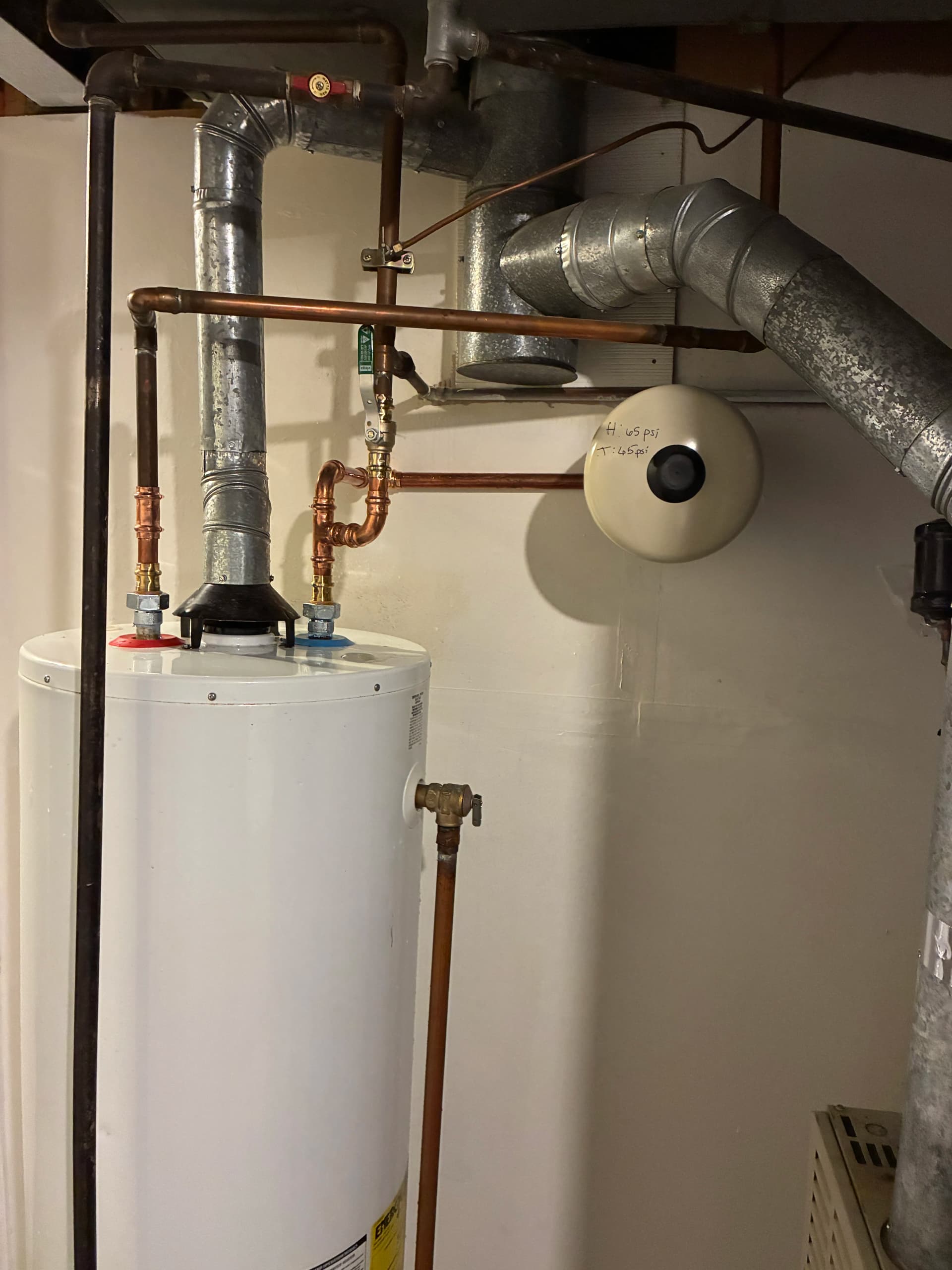
Here's what we were working with on this one - a standard tank water heater in a basement utility space with a closed-loop system and no thermal expansion tank in place. In a closed-loop setup, when water heats up and expands, that pressure has nowhere to go. The expansion tank gives it somewhere to go. Without it, that pressure cycles through the system over and over, wearing things down fast.
We added the expansion tank and tied everything in cleanly with copper. The connections are tight, the support is solid, and the pressure notation on the tank itself confirms the system was set correctly before we left. This isn't just about making things look clean - it's about making sure the system operates the way it's supposed to and meets local building code.
A lot of plumbing problems we see come down to small things that were either skipped during original installation or just never updated as code requirements changed. Getting your water heater setup into compliance isn't a complicated fix, but it does need to be done right. Proper sizing of the expansion tank matters, and the system pressure has to be dialed in to match.
If you're not sure whether your water heater setup is up to code, it's worth having someone take a look. The cost of a thermal expansion tank installation is a fraction of what an early water heater replacement or a water damage repair runs.