What's Behind Your Wall Could Be Causing Plumbing Problems
Most homeowners never think about water pressure until something goes wrong. A shower that barely trickles. A faucet that hammers when you shut it off. Fixtures that wear out way faster than they should. These are all signs that the pressure coming into your home is either too low or too high - and neither is good.
What's inside your walls matters more than most people realize. A pressure reducing valve - or PRV - is one of those components that quietly does a big job. It sits on your main water line and keeps the pressure coming into your home within a safe range. When it starts to fail, you feel it everywhere. Inconsistent pressure, banging pipes, leaks at fixtures. The problems compound fast.
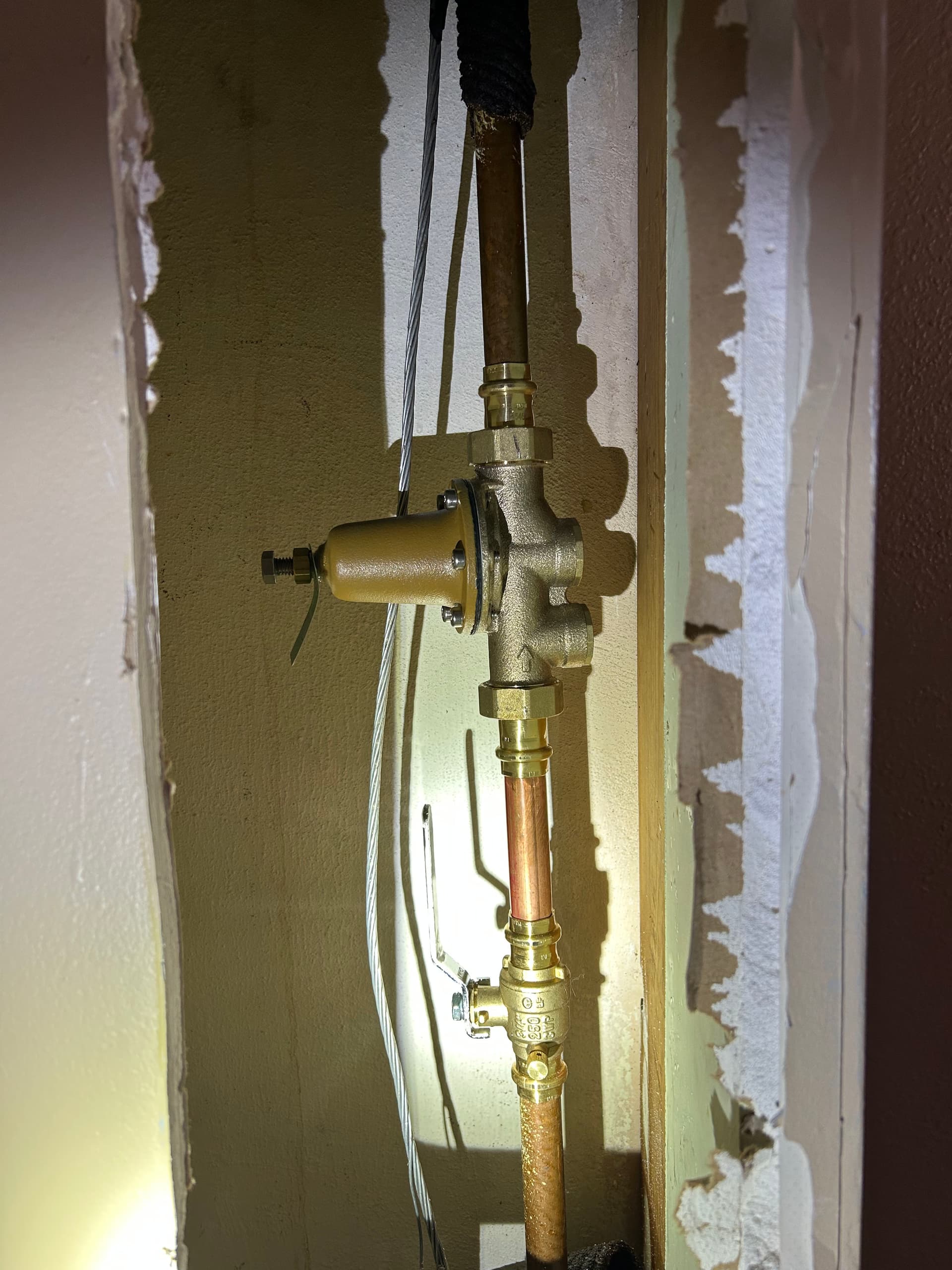
We see this kind of work regularly. Opening the wall, identifying what's going on, and getting the right hardware installed properly. A new brass PRV connected to copper supply lines isn't a flashy job, but it's the kind of fix that protects everything downstream - your water heater, your fixtures, your appliances. Getting it right the first time is what matters.
Water pressure that's too high - typically anything above 80 psi - puts constant stress on your plumbing system. Over time, that stress causes small leaks to develop, fittings to loosen, and valves to fail prematurely. Too low and you're dealing with daily frustration plus the risk of contamination issues. Either way, ignoring it isn't a great option.
If something feels off with your water pressure, that's worth paying attention to. It's rarely a problem that fixes itself.